RealEstate - 2026
Optimizing Michigan Real Estate Brokerage Operations in 2026
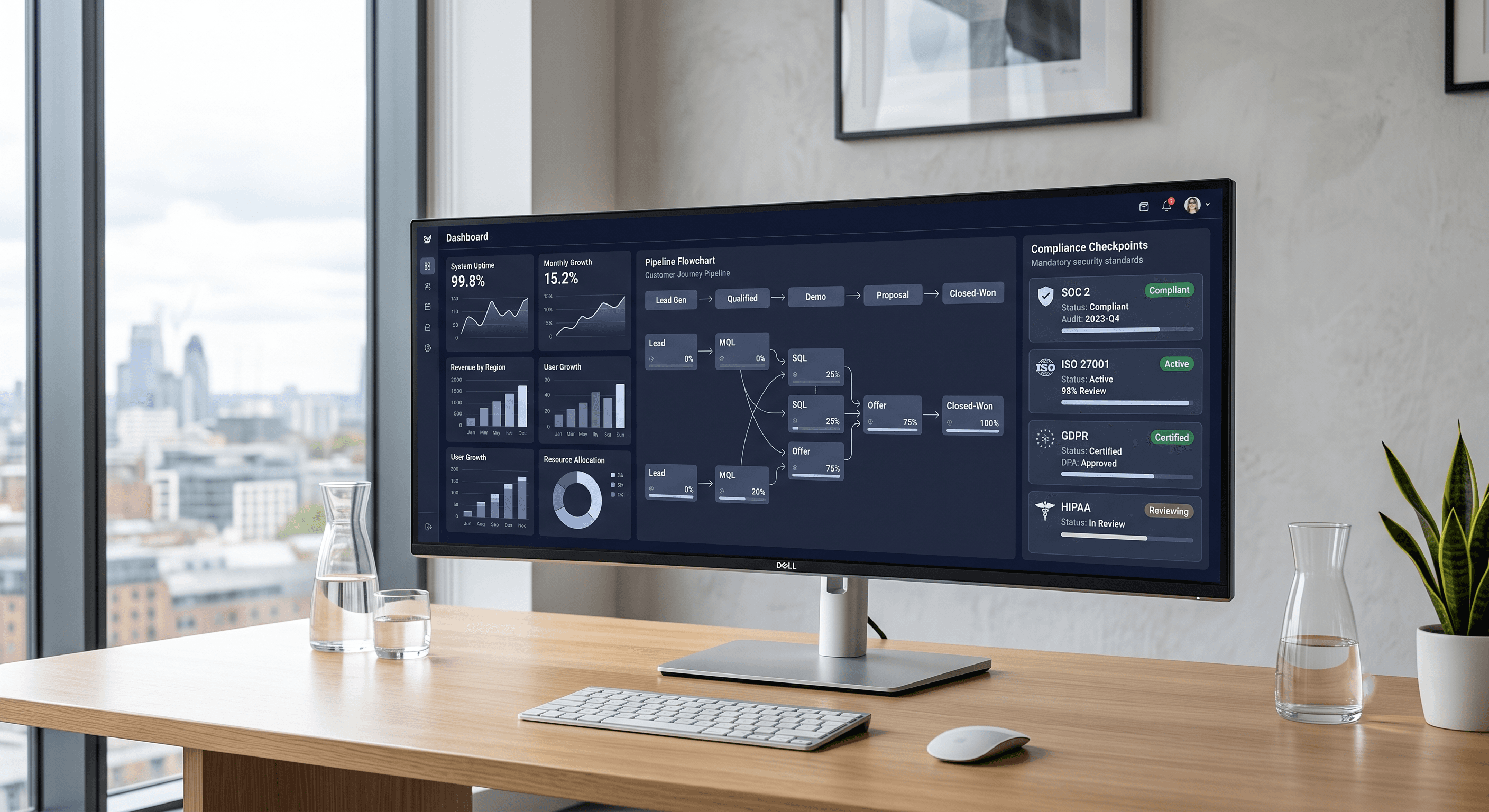
Entering the spring 2026 market, independent broker-owners and mega-team leaders face a highly bifurcated landscape. Inventory across Metro Detroit has risen 12–18% compared to the previous year, and median price appreciation has stabilized at a sustainable 3–5%.1 While the market approaches equilibrium, internal profit margins are under unprecedented structural pressure. Following the enforcement of the National Association of REALTORS® (NAR) settlement, traditional compensation models have been permanently fractured, forcing firms to completely overhaul their back-office workflows. Mastering Michigan real estate brokerage operations is no longer an administrative luxury; it is the sole mechanism for protecting and scaling profit margins.
Organizations capturing market share across Oakland, Macomb, and Wayne counties are aggressively abandoning fragmented legacy systems. By standardizing technology stacks, integrating automated transaction workflows, and rigidly adhering to state compliance standards, these operators successfully scale transaction volume without simultaneously compounding their W-2 headcount. This blueprint details the exact operational infrastructure, data integrations, and administrative leverage strategies required to build a high-margin, enterprise-grade real estate machine.
1. The 2026 Market Context: Margin Compression and Operational Realities
The macroeconomic indicators currently defining Michigan's real estate sector demand a highly agile operational response from independent brokers. The average days on market (DOM) across standard residential inventory have increased to 25–35 days, a stark contrast from the sub-14-day frenzies experienced during previous cycles. Concurrently, Altos Research data indicates a Market Action Index (MAI) score of 41, signaling a moderating seller's market where 34.88% of active listings undergo price reductions before securing an executed contract.
This extended transaction lifecycle intrinsically increases the administrative burden per file. When a property sits on the market for 35 days and requires multiple pricing adjustments, the back-office workload required to service that listing doubles. The true cost of this extended lifecycle is measured in administrative fatigue and operational bloat.
Simultaneously, the industry is operating under the permanent structural changes instituted by the August 2024 NAR settlement. Listing brokers are strictly prohibited from communicating offers of compensation via Multiple Listing Service (MLS) platforms. Furthermore, the Michigan Department of Licensing and Regulatory Affairs (LARA) now mandates written buyer agency agreements detailing objective, non-open-ended compensation rates before initiating property tours
For operations managers, this regulatory shift requires rigorous, zero-defect document management protocols. Every client consultation must generate a verifiable, securely stored service provision agreement. Failure to systematize this intake process exposes the firm to state audits and severe licensing sanctions.
Operational Insight: The modern brokerage cannot out-sell a broken back office. When median days on market increase and compliance requirements multiply, gross commission income (GCI) will rise. Still, net operating income (NOI) will plummet unless the administrative cost per transaction is aggressively controlled.
2. Restructuring Michigan Real Estate Brokerage Operations

To insulate against margin compression, elite Michigan brokerages are actively abandoning ambiguous operational models in favor of hard-coded, volume-driven structures. The challenge lies in executing these structures flawlessly across dozens or hundreds of affiliated agents while maintaining strict adherence to state financial regulations.
Historically, the independent broker relied heavily on human capital to monitor agent compliance and calculate splits. In 2026, this manual architecture is financially unviable. The operational framework must be decentralized from specific office managers and centralized into a cloud-based infrastructure. This transition requires mapping the exact workflow of every file, from initial lead capture through escrow disbursement, and assigning precise technological or outsourced human capital to each touchpoint.
A highly optimized brokerage functions identically to an enterprise SaaS company. The agent acts as the frontline sales executive, while the brokerage provides the "Operating System", the CRM, the transaction management software, the legal compliance tracking, and the marketing automation.
- Lead Intake: Automated routing via CRM logic based on zip code, price point, or agent performance metrics.
- Compliance Verification: Gated transaction portals that prohibit a file from moving to "Pending" until the required LARA service provision agreements are countersigned and authenticated.
- Pipeline Visibility: Broker dashboards that aggregate active escrows, projecting 30-day and 60-day cash flow with institutional accuracy.
By restructuring around these core pillars, brokers eliminate the friction associated with traditional paper-pushing and transform their operations into scalable, high-leverage assets.
3. Navigating Post-NAR Commission Splits and Fee Structures

The financial architecture of the modern brokerage requires sophisticated calculation systems. Traditional 50/50 or 60/40 splits remain utilized by firms providing heavy lead generation and full-service marketing support, such as New Michigan Realty.6 However, the market is rapidly migrating toward hybrid cap models designed to aggressively recruit and retain high-volume producers.
Operating these varied commission splits requires enterprise-grade financial software. For example, Key Realty instituted a $6,600 annual company-wide commission cap alongside a mandatory $299 client-paid brokerage fee per transaction effective January 2026. When a file closes, the back-office system must automatically calculate the gross commission income, deduct the $299 transaction fee, apply the agent's specific tier split, check the running total against the annual $6,600 cap, and trigger direct ACH disbursements.
The administration of post-NAR commission splits also necessitates a structural change in how buyer agency compensation is processed. Because these offers are no longer aggregated on the MLS, back-office teams must manually verify the compensation agreements executed directly between the listing broker and the buyer broker prior to authorizing closing disclosures.
Operational Insight: Relying on spreadsheets to track agent caps and variable commission splits introduces fatal accounting errors. High-volume brokerages must utilize software that directly links transaction compliance milestones to automated ledger accounting, removing human data entry from the payout process entirely.
4. Architecting the Real Estate Tech Stack 2026

The concept of a brokerage tech stack has evolved from a disparate collection of applications into a unified, API-driven ecosystem. A disconnected technology stack generates immense operational friction; data manually transcribed between a CRM, a dialer, and an e-signature platform introduces critical human error and delays response times.
For Michigan operators, the integration of MLS data directly into the transaction workflow is paramount. Realcomp, Michigan’s largest MLS, transitioned its infrastructure to Cotality Add-Edit and the SkySlope digital transaction management platform in 2025. This native integration allows 15,000 affiliated agents to initiate compliance workflows directly from the MLS interface, pulling property data seamlessly into required state forms.13 Furthermore, the Great Lakes Repository facilitates data sharing across 13 distinct Michigan MLS organizations, centralizing property data feeds for statewide brokerages.14
A high-functioning real estate tech stack 2026 relies on three foundational, deeply integrated pillars:
- The Intelligence Layer (CRM): The centralized database tracking lead interactions, predictive analytics, and automated multi-channel follow-ups. The CRM acts as the singular source of truth for all client data before a signed contract.
- The Communication Engine (Dialer): Voice-over-IP (VoIP) systems are directly integrated with the CRM to log call metrics, record compliance conversations, and track outbound agent output systematically.
- The Execution Layer (Transaction Software): Platforms like SkySlope or Dotloop that handle secure document routing, multi-state compliance checks, and automated task generation.
When engineered correctly, these three systems operate as a single unit. A status change in the Execution Layer must trigger an automated marketing sequence in the Intelligence Layer.
5. Scaling via Transaction Coordination Software and AI
The single greatest lever a broker can pull to increase profitability is optimizing the contract-to-close phase. Managing addenda, title commitments, inspection contingencies, and lender communications requires meticulous precision. High-volume offices cannot rely on producing agents to self-manage this administrative burden.
Transaction coordination software acts as the digital backbone of the brokerage. Platforms purpose-built for real estate provide structured repositories searchable by transaction, automated milestone tracking, and communication logging that permanently attaches correspondence to the file record.
Brokerages scaling past 50 agents are increasingly overlaying artificial intelligence onto these traditional systems. Deploying an AI transaction coordinator software layer, such as ReBillion.ai, over existing architecture allows mid-market brokerages to process 100 to 300 additional deals annually without expanding physical payroll. These AI layers can read executed purchase agreements, extract critical dates, and automatically populate the task calendar within the core management software.
Operational Insight: An integrated ecosystem transforms qualitative administrative effort into quantitative data. When a purchase agreement is executed in SkySlope, the CRM should automatically shift the client to a "Pending" sequence, halting acquisition marketing and initiating post-close referral campaigns without human intervention.
6. Executing LARA Compliance Guidelines and Escrow Mechanics

Regulatory adherence is non-negotiable. Brokers must navigate the precise handling of trust and escrow accounts as mandated by state law. Pursuant to MCL 339.2512 and Mich. Admin. Code R. 339.22313, all funds received in a fiduciary capacity, including earnest money deposits, must be deposited into a non-interest-bearing demand trust account.
Back-office systems must document every deposit and withdrawal with cryptographic certainty, ensuring the signature of a licensed broker or associate broker accompanies all disbursements. Audits by LARA are uncompromising, and the brokerage's operational infrastructure must be capable of generating a flawless, chronologically accurate ledger of all escrow activities on demand.
When engineering transaction workflows, brokers must also enforce stringent LARA compliance guidelines regarding the utilization of unlicensed personnel. Under Michigan occupational codes, unlicensed assistants and coordinators are strictly prohibited from engaging in licensed activities
- Permitted Activities: Unlicensed coordinators may answer phones, assemble documents, upload disclosures into compliance software, act as couriers, and hand out prepared printed materials at open houses
- Prohibited Activities: Unlicensed personnel cannot independently hold open houses, show properties to potential buyers, solicit listings via phone, or answer client questions about title insurance, financing, or contract negotiations
Attempting to scale an internal team of unlicensed assistants to handle substantive transaction queries exposes the broker to severe penalties. Licensees who violate these statutes face administrative fines up to $10,000, probation, or the complete revocation of their broker's license
7. Standardizing the Contract-to-Close Lifecycle
Operational scale is achieved through ruthless standardization. The contract-to-close lifecycle must follow a rigid, reproducible Standard Operating Procedure (SOP) that eliminates guesswork and prevents critical deadlines from being missed.
Upon the execution of a purchase agreement, the transaction coordinator initiates the digital workflow. The first 48 hours are highly time-sensitive. Earnest money must be tracked and deposited into the appropriate escrow account. The property inspection must be scheduled, and all initial disclosures, including state-specific lead-based paint and seller disclosures, must be verified for full execution
The middle phase of the transaction focuses on multi-party coordination. The coordinator must interface with the title company to ensure the title commitment is clear of unexpected encumbrances. Concurrently, the coordinator must track the lender's appraisal timeline and loan processing milestones to ensure the financing contingency is met before the contractual deadline
The final phase involves closing preparation. The operations team must audit the file for absolute compliance, ensuring the broker information is completed on all addenda, the Home Warranty invoice is submitted to escrow, and the final Commission Instructions are securely routed to the title company
Operational Insight: High-volume transaction coordination is an exercise in proactive risk management. Elite operations teams do not wait for lenders or title officers to provide updates; they deploy automated follow-up sequences integrated into their software to extract status updates days ahead of hard deadlines.
8. Strategic Delegation to Elite Virtual Assistants
The financial disparity between in-house administrative staffing and outsourced operational leverage is significant. An experienced, full-time, in-house transaction coordinator in Michigan commands a base salary between $40,000 and $65,000 annually.23 In high-cost metro areas, this figure can easily exceed $75,000. Furthermore, this base salary excludes payroll taxes, benefits, physical office overhead, and software licenses. This represents a massive fixed cost that heavily penalizes the brokerage during seasonal market contractions.
Conversely, elite independent brokerages deploy outsourced, flat-fee transaction management services or specialized Virtual Assistants. Dedicated coordination agencies in Michigan typically charge between $350 and $450 per successfully closed residential file. Because this model is entirely variable, the brokerage only incurs costs when revenue is generated. If a deal falls through during the inspection period, the brokerage owes zero administrative fees
For tasks extending beyond the contract-to-close window, such as listing preparation, CRM database management, marketing deployment, and lead intake, high-volume teams utilize highly trained Virtual Assistants (VAs). A specialized VA operates as an extension of the brokerage, executing the exact tech stack workflows and SOPs designed by the broker-owner.
By outsourcing to specialized, enterprise-grade operations engines like PrimeRealOps, brokerages permanently transfer the compliance and overhead liability while simultaneously injecting institutional efficiency into their daily workflows.
Conclusion
The macroeconomic data governing the 2026 Michigan market dictates a clear mandate: competitive advantage is no longer strictly determined by top-of-funnel lead generation, but by back-office operational execution. Brokerages attempting to navigate complex commission structures, shifting post-NAR compliance requirements, and extended days on market with fragmented legacy systems will inevitably succumb to severe margin erosion.
Surviving and dominating the current real estate cycle requires a ruthless audit of existing technology stacks, the standardization of all fiduciary documentation, and the strategic deployment of variable-cost transaction coordination. By transforming the back office from a localized cost center into a scalable, cloud-based engine, broker-owners achieve the operational leverage necessary to capture regional market share. PrimeRealOps provides the enterprise-grade transaction architecture, automated listing management, and specialized virtual systems required to instantly upgrade your infrastructure. Scale your volume, protect your margins, and deploy a flawless operational machine today.
Market Intelligence to Your Inbox
Receive curated analysis of the global HNW real estate market, delivered every Tuesday.