Brokerage Operations - 2024
Why Smart Brokers Choose Affordable MLS Listing Management Over In-House Hires

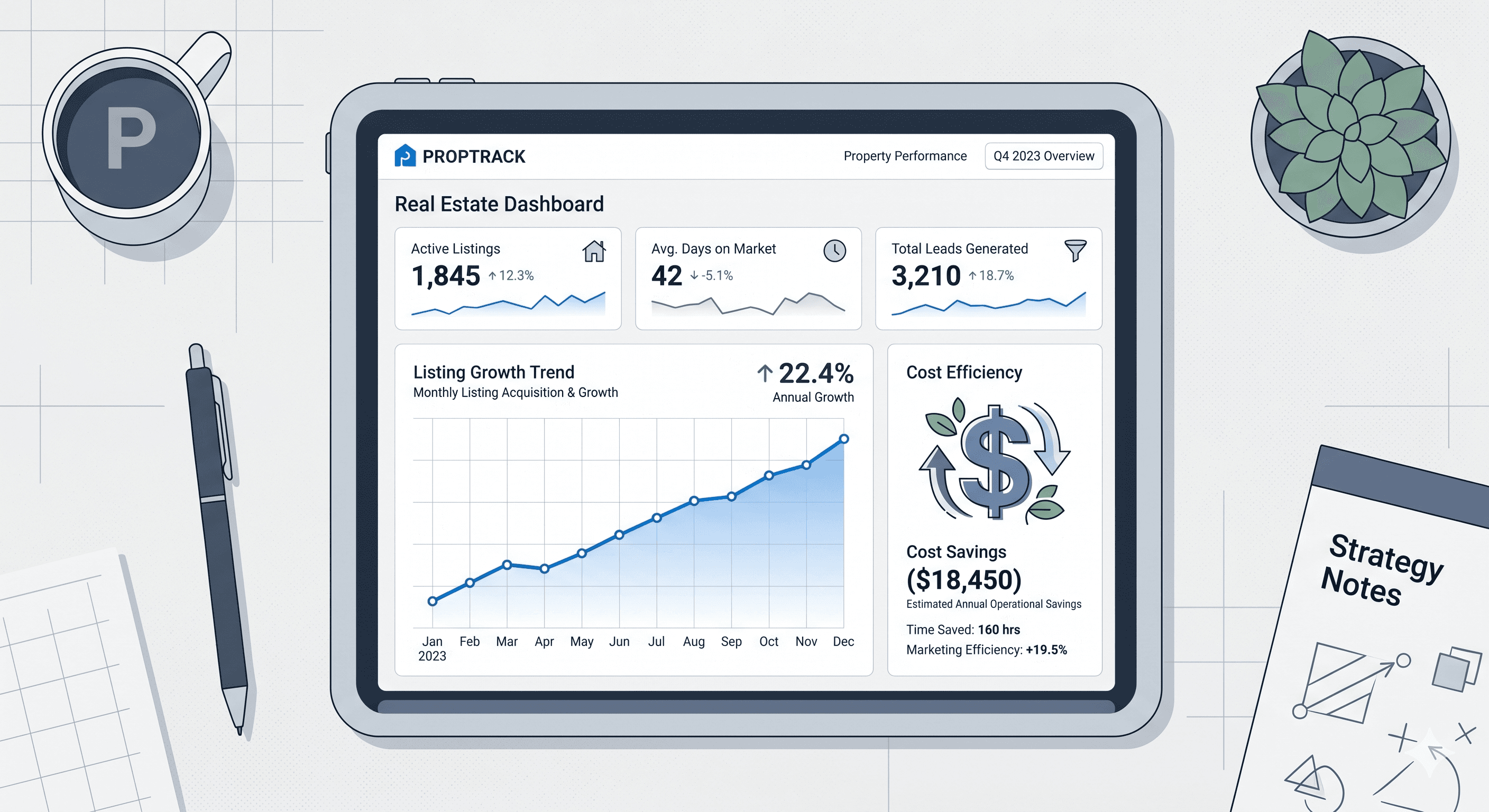
Why Smart Brokers Choose Affordable MLS Listing Management Over In-House Hires
Margin compression is the silent threat eroding profitability in modern real estate brokerages. Every dollar that’s tied up in fixed overhead is a dollar not available to invest in growth, or in hiring agents, or in profit margins.” The core of this administrative bottleneck lies in the traditional method of syndicating property data, which involves using permanent, in-house staff on a fixed salary to handle fluctuating listing volumes.
In response, leading brokers are seeking to increase operational efficiency to lift margins and accelerate time to market. They’re cutting bloated payrolls in favor of affordable MLS listing management. Brokerages are pushing listings through faster, enforcing stricter compliance, and dramatically cutting overhead by moving away from fixed-cost human capital to highly systemized, precision-engineered pipelines. If your brokerage still uses an in-house W-2 employee to manually enter listing data, you’re probably paying too much for a sub-optimized, rigid workflow. It’s time to move beyond old hiring models and build scalable infrastructure.
Hiring an internal listing assistant feels like the logical next step for a growing brokerage, until you rigorously break down the unit economics. Brokerage owners often calculate the cost of an employee purely by their base salary, ignoring the compounding expenses of maintaining human infrastructure for a task that is inherently transactional.
The True Cost of W-2 Employees: A Breakdown:
A full-time in-house listing coordinator typically makes $3,000 to $5,000 per month in base salary. But the real cost of the money is much higher than the gross paycheck. When auditing operational expenses, brokerages must account for:
- Payroll Taxes and Benefits: FICA, State Unemployment Insurance (SUI), Workers’ Compensation, and, if there are health benefits, another 20% to 30% more than the base salary.
- Software and Licensing Dues: Independent MLS login credentials, transaction management software seats (think SkySlope, Dotloop), and dedicated hardware all add up to another several hundred bucks a month.
- Management and Training Time: The invisible cost of training a new hire, managing their daily output, and dealing with turnover drains hundreds of hours annually from managing brokers.
The Problem with Fixed Costs in a Variable Market:
The real estate market is very volatile and seasonal. Your brokerage workload bounces between the spring market peak and the holiday season slowdown, but your fixed payroll stays painfully static.
This structural flaw leads to major operational inefficiencies:
- Overpaying during low season: In December, when the listing volume falls 40%, you continue to pay 100% of your assistant’s salary for downtime.
- Overwhelmed during peak volume: In May, when your inventory rises, one assistant is not enough.
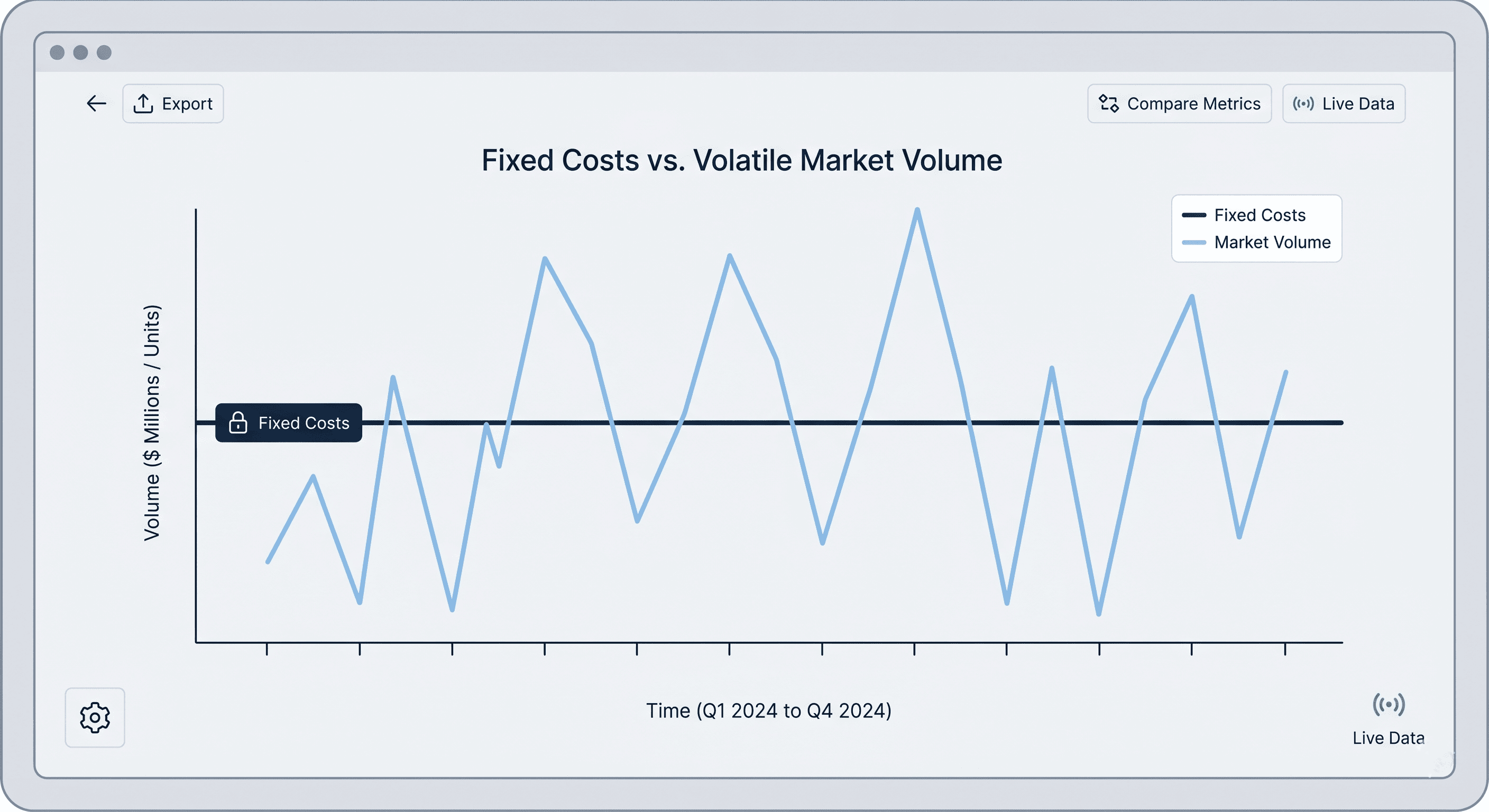
Operational Insight: Industry data from the National Association of Realtors (NAR) continually points out that brokerages with high fixed overhead struggle the most during market contractions. Converting backend operations from fixed payroll to variable, demand-driven costs is the fastest way to recession-proof your brokerage’s P&L.
The core shift happening across elite, modern brokerages is the transition from managing people to deploying systems. Affordable MLS listing management fundamentally reorganizes how brokerages handle backend data entry.
Eradicating Payroll for Precision Output:
Instead of absorbing a flat $4,000 monthly expense regardless of output, you shift to a strict pay-per-listing model. If you process 5 listings in a slow month, you pay for exactly 5. If you process 50 listings during the spring rush, you pay for exactly 50, without ever needing to interview, hire, or train temporary staff.
What this optimized infrastructure unlocks for brokerages:
- Absolute Cost Control: You only deploy capital when a revenue-generating event (a new listing) is initiated.
- Instant Scalability: A systemized vendor can absorb a 500% increase in listing volume overnight. An in-house assistant cannot.
- Downtime Removal: Your employee’s break times, illnesses, and vacation periods are your responsibility. However, you will be billed strictly for the end product.
Building a Systemized Listing Pipeline
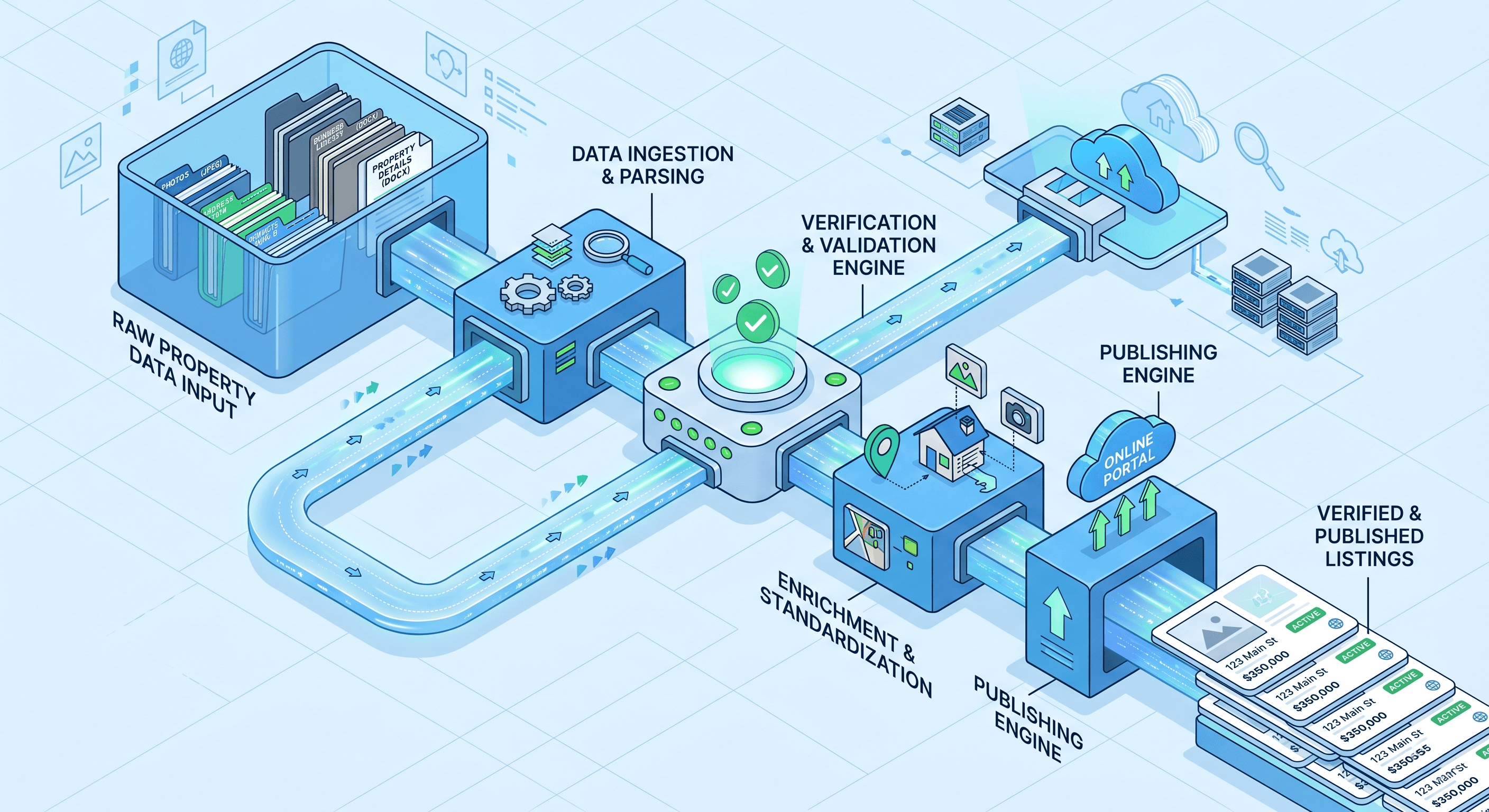
Affordable MLS listing management is not simply about outsourcing; it is about upgrading to a precision-engineered workflow. Dedicated listing teams utilize advanced tech stacks to extract data from intake forms, cross-reference public tax records, optimize media assets, and push data live to the MLS with zero friction. It removes the guesswork and variability of human execution.
Pro Tip: When auditing your current listing workflow, track your "Cost Per Listing" (Total Monthly Assistant Cost ÷ Total Monthly Listings). Brokers are often shocked to realize they are effectively paying $150 to $200 per listing internally, a cost that can be reduced to $15 with the right operational partner.
High-performing brokerages do not just cut costs; they obsessively optimize their operations. While reducing overhead is a massive benefit of affordable MLS listing management, the operational speed and strict accuracy it provides are what truly drive brokerage growth.
Accelerating MLS Activation Times:
In real estate, speed to market directly impacts Days on Market (DOM) metrics and client satisfaction. An in-house assistant juggling phone calls, agent questions, and office management will invariably experience delays in data entry. Professional listing coordination teams operate in a vacuum of deep work. The company can complete listing contracts, analyze the property information, organize photos in high resolution, and publish listings within moments, compared to a distracted internal employee who does the same task.
Bulletproof Compliance and Quality Control Assured:
The local MLS boards maintain strict rules about data entry, photo watermarks, public remarks, and timely status updates. In cases such as the National Association of REALTORS® Clear Cooperation Policy and RESO Guidelines, brokerages can suffer significant fines, usually between hundreds or even thousands of dollars.
A standardized listing management system provides:
- Compliance Checks Embedded in the System: Each field is checked for MLS rule compliance (CRMLS, Bright MLS, etc.) prior to posting to the MLS.
- Standardized Quality: Consistent formatting of public remarks, exact mapping of room dimensions, and perfect photo sequencing.
- Seamless Revisions: Price reductions and status changes are executed instantly via a ticketing system, eliminating the risk of fines for delayed updates.
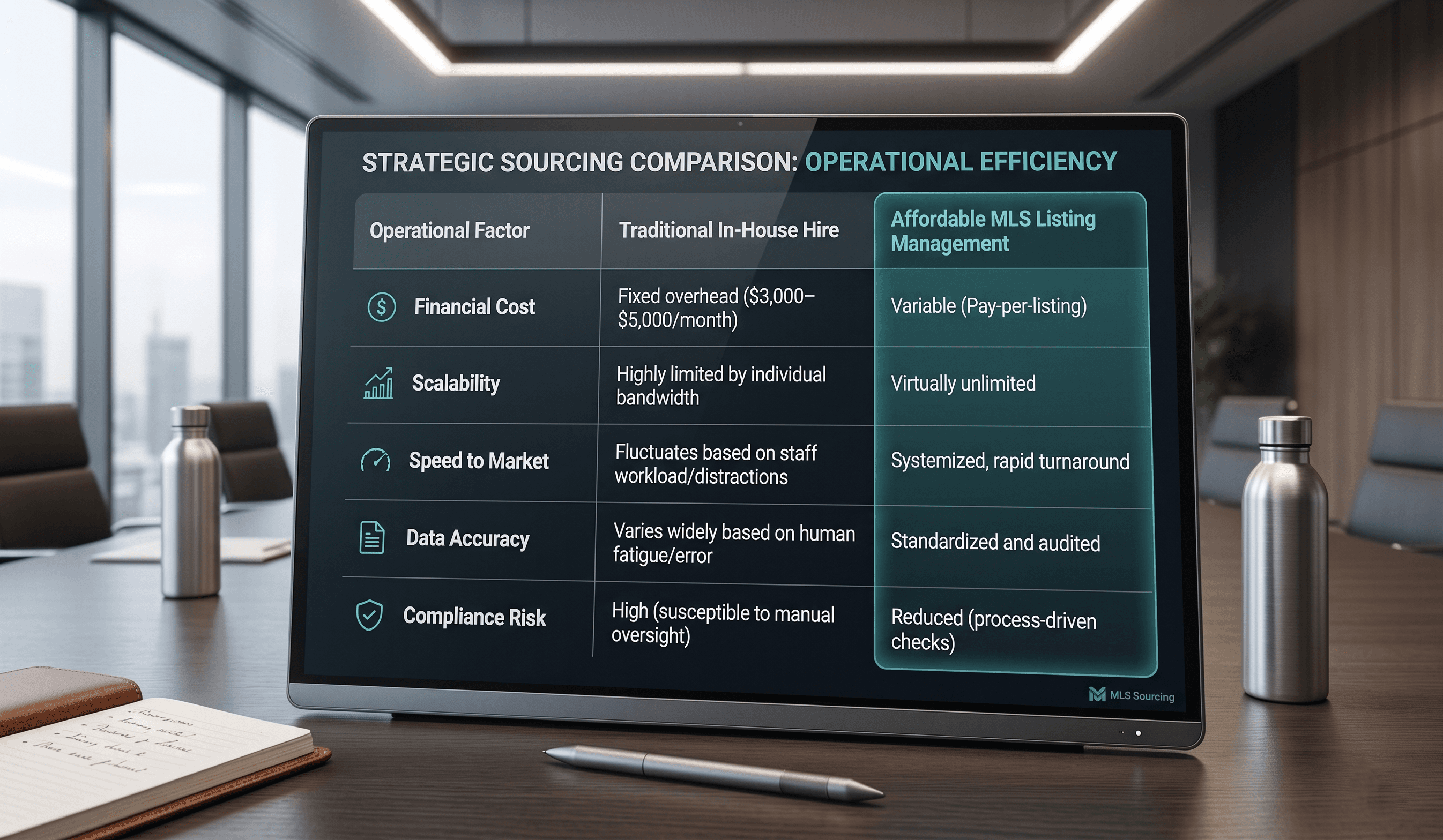
To clearly illustrate why systems outperform traditional staffing models, brokerages must look objectively at the risk and scalability metrics associated with both paths. The verdict in modern real estate tech is clear: fixed staffing models are a liability.
The Scalability Gap:
When comparing an internal hire to affordable MLS listing management, the most glaring disparity is scalability.
Minimizing Risk through Process-Based Workflows:
Any human error that comes from entering data manually is solely the responsibility of the agent who made the mistake. If they enter the incorrect school district, calculate the wrong square footage, or forget to attach the lead paint disclosure form, the blame lies with the broker. By leveraging a specialized listing management service, brokerages transfer this manual execution to a system governed by standard operating procedures (SOPs) and multi-tier quality assurance protocols.
Operational Insight: The most significant bottleneck for boutique brokerages attempting to cross the $50M to $100M annual production threshold is administrative debt. Transitioning to a variable-cost listing model immediately relieves this pressure, allowing management to focus entirely on agent recruitment.
The decision to invest in affordable MLS listing software is more than cost savings – you are transforming the operational infrastructure of your company. It acts as a major growth driver, allowing you to recruit top-notch real estate agents.
Standardizing Workflows Across the Brokerage:
A strong brand is consistent, no matter the volume of activity. From 10 to 150 listings a month, all of the properties need to be posted equally polished. Systemized listing coordination ensures operational clarity. Every listing follows the same high-performance pipeline, featuring perfect photo formatting, accurate syndication to portals, and flawless compliance documentation.
Freeing Agents for Revenue-Generating Activities:
Agents are revenue generators, not data entry clerks. When an in-house assistant is overwhelmed, agents often end up picking up the administrative slack, spending their evenings resizing photos or struggling with MLS drop-down menus.
By outsourcing this to a precision-engineered listing service, brokerages provide their agents with a massive value proposition:
- Total elimination of administrative desk-time.
- More hours dedicated to prospecting, conducting listing presentations, and negotiating contracts.
- A frictionless, concierge-level experience that makes the brokerage highly attractive to competing top producers.

If you are ready to replace expensive, rigid in-house hires with a lean, scalable system, PrimeRealOps delivers operational excellence tailored specifically for high-performing real estate brokerages. We do not just process data; we act as the tech-forward operating system for your back office.
Why pay an in-house assistant $4,000 a month when you can get precision-engineered listings processed for exactly $15 per file?
Our Elite Listing Management Tiers:
We offer structured solutions designed to match your exact operational needs without the bloat of traditional salaries:
- Pro Tier: $15 per listing: High-speed, highly accurate MLS input complete with rigorous compliance checks and data validation.
- Prime Tier: $39 per listing: Comprehensive, full-service listing management, including unlimited updates, status changes, photo re-sequencing, and document uploads.
With PrimeRealOps, there are no salaries, no hidden overhead, and zero inefficiencies. You scale instantly without ever conducting another interview, paying only when you have active listings to process.
Conclusion:
The real estate industry is rapidly evolving, and the brokerages that will dominate the next decade are those that mercilessly eliminate inefficiencies and automate their backend operations. Clinging to the outdated model of paying a fixed salary for data entry restricts your agility and eats into your margins. Affordable MLS listing management is no longer an optional luxury; it is a critical competitive advantage that allows you to reduce overhead, increase speed to market, and scale without limits. Stop building your operations around people and start building them around systems.
Ready to cut costs and engineer a faster, more profitable brokerage? Explore our scalable Listing Management Services and transform your operations today.

Market Intelligence to Your Inbox
Receive curated analysis of the global HNW real estate market, delivered every Tuesday.